A WhatsApp Enquiry at Night Should Be Ready for a Person
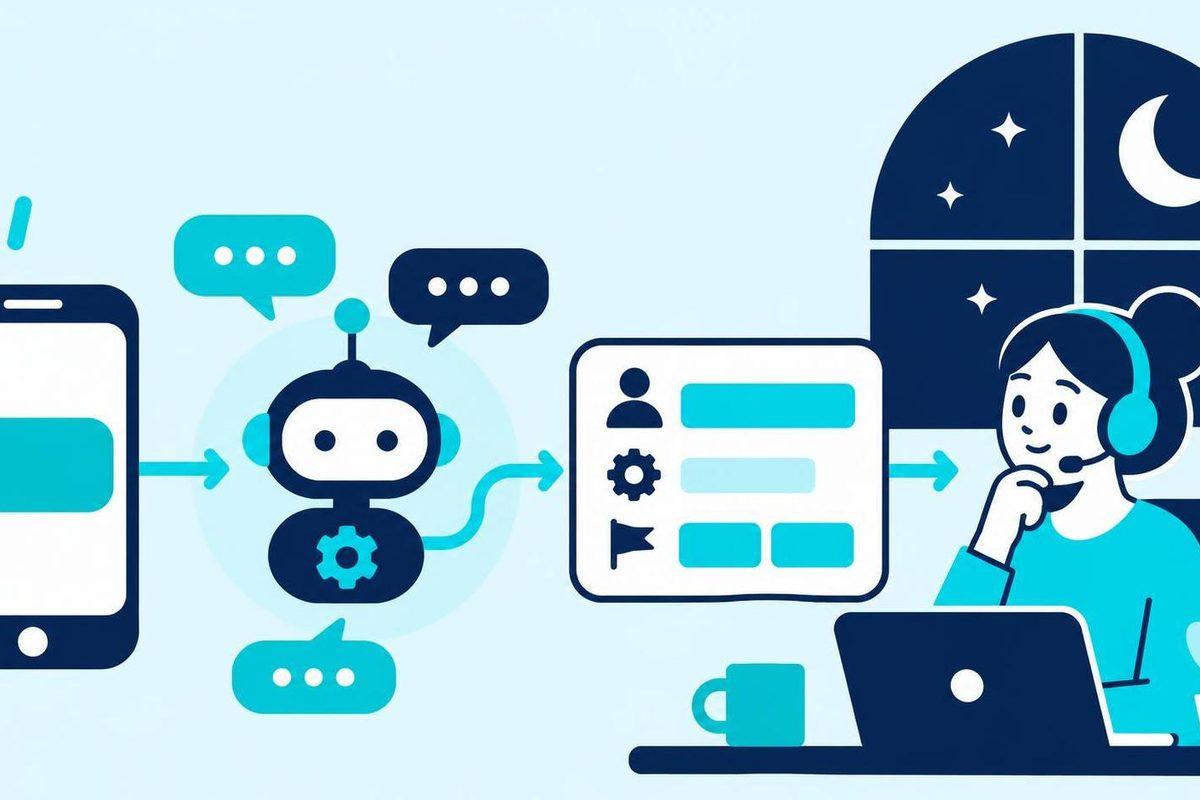
After dinner, a business owner sends a WhatsApp enquiry about replacing a manual approval process. They explain the problem and ask for a call. The assistant asks how many people work there. The owner answers and asks for a call again. It asks another question.
This is a fictional example, but we would test it before approving an assistant. The customer has asked for a person. The next step should be arranging contact, not continuing a questionnaire.
At Cortex Solution, we run WhatsApp replies on day and night shifts in our own AI office, with a team lead checking reply times and quality. That experience informs how we would scope after-hours enquiries for a Malaysian SME. English, Malay and Chinese would each need agreed tests; our own operation is not proof of performance in all three.
Answering at night is not promising a person at night
An automated reply and a person who can make a commitment have different availability.
Our day-and-night setup does not mean a developer is available for a consultation whenever a message arrives. For your business, write down who can take over and when before approving the assistant's wording. Identify it as an automated assistant rather than leaving the customer to guess.
For an after-hours call request, we would require the assistant to acknowledge the request and explain the agreed next step. If booking is included, it should offer only times supplied by the approved booking process. If booking is not connected, it should collect a preferred time without saying the appointment is confirmed.
A requested call is not a booked call. Ask the builder to demonstrate both states, including the message a customer sees while waiting.
Stop qualifying when someone asks to talk
Our earlier WhatsApp enquiry article covers answering from approved business information. The operating question here is narrower: when should the questions stop?
In our own office, customer service exams use scenarios such as someone asking for a call, someone asking for the owner, and a question the assistant should not guess at. When an answer slips, a training coach identifies the failed questions and drafts an instruction change. A person approves that change before it goes live.
Our existing AI office article gives offering booking times instead of asking more questions as an example of an instruction fix. For a new setup, we would make the rule explicit: a request to speak to a person must not restart the questionnaire. Any booking offer would still depend on the agreed booking process.
For the opening scenario, the customer has already supplied a process problem. We would pass that context forward, ask only for missing information needed to arrange contact, and leave the technical discovery to the call. An assistant should not make someone complete a sales questionnaire to reach the team.
Test the same decision in English, Malay and Chinese
If your business needs all three languages, put each one in the scope. We would want to see the handoff work in each requested language before accepting the setup, rather than treating translation as a final polish.
Start with one intent: the customer wants a person to call about a custom workflow. Prepare equivalent fictional messages in English, Malay and Chinese, including a version that switches language halfway through.
Have someone fluent in each language review the answer. Check more than whether the sentence sounds natural. Does it preserve the request for a call? Does it ask again for details already supplied? Has a cautious statement about assessing the project become a promise that the team can deliver it?
The expected next action should stay the same across languages. The wording need not be a literal translation.
Keep an approved source for each factual answer, with reviewed wording where needed. If the assistant is unsure what a customer means, require a brief clarification or a handoff. Do not approve a confident guess simply because it is fluent.
Define a hot lead by the next action, not enthusiasm
For this proposed workflow, we would mark an enquiry as ready for human follow-up when the customer requests a call or a custom quote. That is a routing rule, not a prediction that they will buy.
We would keep urgency separate. A current customer's broken service should have a support route rather than compete with new sales enquiries under the same label.
Agree what the person receiving the handoff needs. For the fictional approval-process enquiry, a useful handoff record would contain:
- the process the customer described, using their wording;
- the request to speak, including any preferred contact time;
- the questions already answered;
- the unresolved point and the person responsible for following up.
Keep the record limited to what the receiving person needs. Agree who may access it and when it should be deleted before connecting a destination. Do not copy whole conversations into extra tools just because the connection is possible.
Treat that as a proposed record, not a list of features already installed in every Cortex setup. Our business automation service includes connecting systems that do not talk to each other. The destination for your enquiries still needs to be agreed.
Ask to see a handoff waiting for someone, then one that person has accepted. A message saying it has been passed on should not be the only evidence that the work exists.
Check live replies differently from prepared drafts
Our own office distinguishes live WhatsApp replies from prepared work. Posts, reports and follow-up drafts are checked before they go out. Live replies use a different quality process: the team lead checks reply times and quality, and the customer service assistant takes regular scenario-based exams.
That is not a supervisor approving every WhatsApp sentence before it is sent. Ask which model is being proposed for your business and what happens when a reply falls short.
For your assistant, decide which replies may go out automatically. Send requests beyond its approved information to a person for assessment, not a promise. If a customer asks whether a particular system can be integrated, a general service description is not confirmation that the specific integration is feasible.
Require the assistant to state what needs checking. Then test that boundary again after changing its information or instructions. Passing the greeting test says little about how it handles a request it cannot answer.
Bring the failed conversation to the demo
Before commissioning the workflow, prepare a short fictional conversation in which the customer corrects a detail and then asks for a person. Use the same scenario for each requested language.
Ask the builder to show where the corrected detail ends up. Follow the handoff to its destination. Have the receiving person explain the next action without asking the customer to repeat the opening message.
In the test setup, remove the available booking times or make the handoff destination unavailable. The assistant should explain that the request is pending rather than confirm something that has not happened. These are proposed acceptance checks, not results from a client installation.
Include a way for the responsible person to pause automatic replies while a problem is investigated. Agree who maintains the approved answers. Leave automatic quoting outside the first scope unless the business has supplied rules that genuinely cover the request.
FAQ
Can an assistant separate urgent requests from general questions?
We would define separate routes for routine answers, support urgency and sales follow-up. Test each with fictional messages. Do not use a single hot-lead label as a substitute for deciding who owns an urgent support request.
Does Cortex Solution run a WhatsApp assistant itself?
Yes. Our AI office runs day and night WhatsApp shifts, with a team lead checking reply times and quality. Customer service exams cover scenarios including requests for a call or the owner.
Can we request English, Malay and Chinese?
Bring all three into the scope. Require equivalent scenarios and fluent review in each language before acceptance; do not assume a demonstration in English proves the other two.
What should we bring to the first conversation?
Bring fictional enquiries, your approved answers and the point where a person should take over. Do not send private customer conversations or personal details for a demo. Include one fictional customer who has already said enough and just wants a call.
Book a free consultation with Cortex Solution and bring a fictional enquiry where the assistant should stop asking questions and arrange human follow-up.
Ready to apply these insights?
Our team can help you implement these strategies and solve your specific challenges.
Schedule a ConsultationNeed this for your business? See our web, mobile and automation services.
See how we implement this
How to Automate WhatsApp Enquiries Without Sounding Like a Bot
A useful WhatsApp lead assistant should answer from known business facts, ask one sensible question, and hand the conversation to a person before it becomes awkward.
What Running an AI Office Taught Us About Handing Work to AI
One job per AI, a supervisor check before anything goes out, memory resets before it gets costly, and stand-ups from real records: lessons from our own AI office.
Connect the Systems You Have Before Building Another App
Keep the tools that work. Start with one handoff, decide who owns each field, and make failed transfers visible before connecting more.
Turning Notifications Into Tasks Without Internet Permission
ClearNext keeps notification analysis on your Android phone and asks before adding a task. Here is where we draw the limits on access and automation.