Focus on a meeting-heavy day: a timer that fits the gaps
The classic Pomodoro routine is 25 minutes of work, a 5-minute break, four times, then a longer break. It assumes you own your morning. On a day with five meetings you own a handful of gaps, and none of them is two hours long.
The technique still works. You only need to change how you use it.
1. Treat each gap as one session
A 40-minute gap is one 25-minute focus session plus time to settle in and wrap up. Do not try to squeeze a second session into a 15-minute leftover; use that for email or a walk.
2. Decide the task before the timer starts
Most wasted focus time is spent choosing what to work on. Choose it in advance: one task, and the first step of it. When the timer starts, there is nothing to decide.
3. Shorten the session for short gaps
A 25-minute session is a default, not a rule. For a 20-minute gap, run a 15-minute one. A shorter session you finish is better than a long one you abandon.
4. Remove the thing that interrupts you
For most people it is the phone. Put it out of reach, or block the few apps you open without thinking. Switching away for "just a second" is what ends a session.
5. Count what you did, not what you planned
At the end of the day, look at the time you actually focused. It is usually less than you planned, and that is useful: next time, plan for that number.
In Dayward
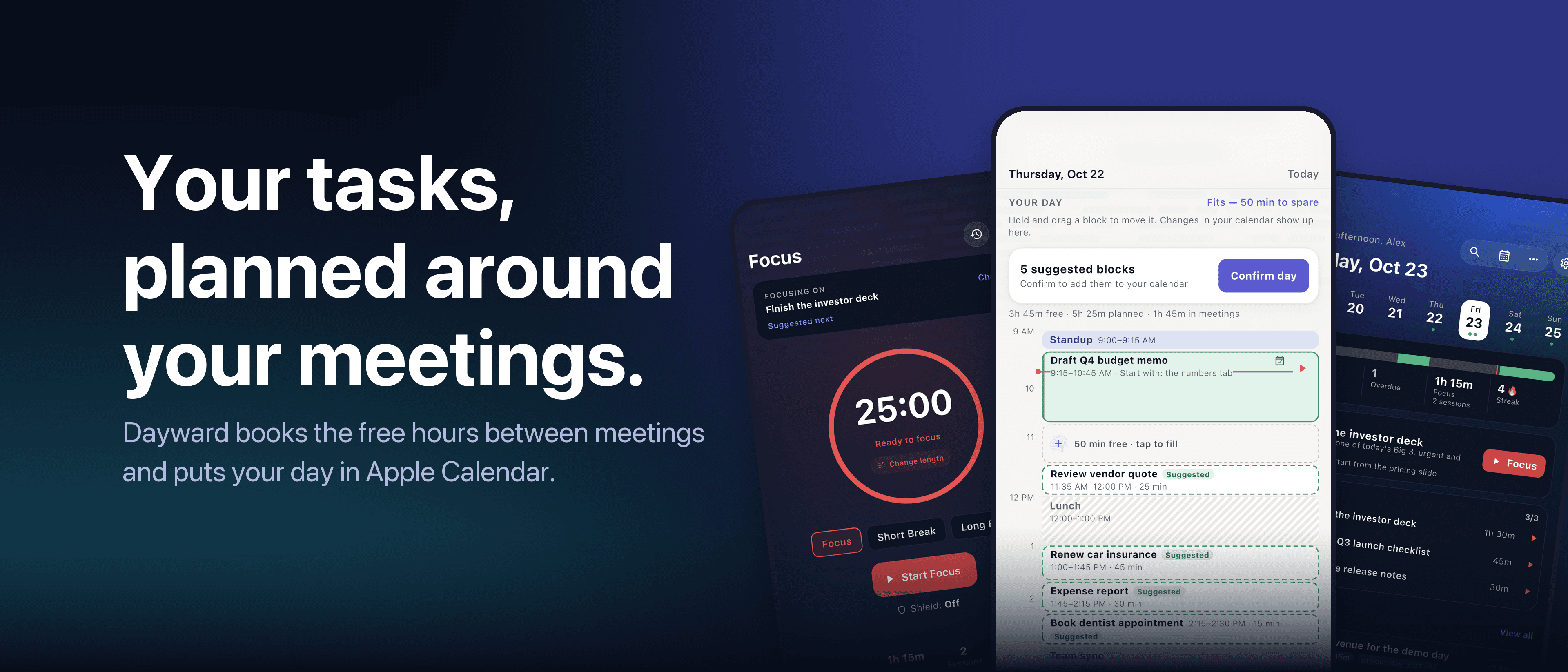
The Focus tab has a timer with Focus, Short Break and Long Break, and you can change the length for the gap you have. Start it from a task, or from a block in today's plan. Optionally, shield distracting apps until the timer ends. Dayward records the sessions, so Today shows how much focus you have had and how many sessions.
Read next: Pick your Big 3
All articles · Dayward · Privacy · Terms
The Cortex Solution blog